Product Overview
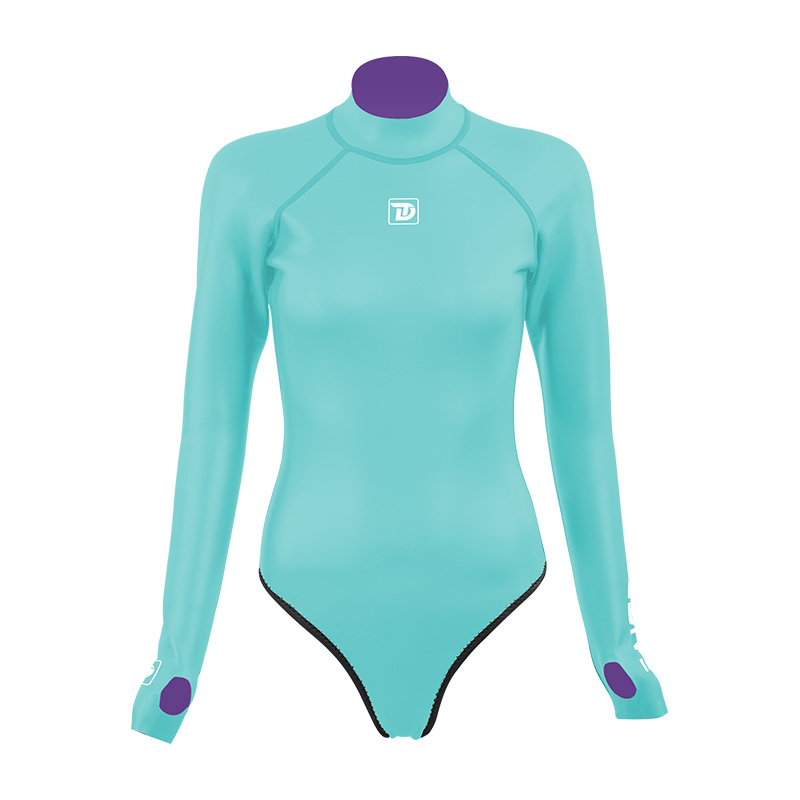
The TRUDIVE Super Elastic Open Back wetsuit Cut Bikini is an open back bikini wetsuit made for warm water: a thin 2 mm limestone neoprene body, a back that is cut completely away, and a leg line that finishes high on the hip. You get the warmth and skin protection of neoprene without the coverage of a full springsuit — a backless springsuit women can put on like swimwear, with no zip, no leash and nothing cold against the spine. A 360° stretch lining lets the panels follow a reach, a kick or a duck dive instead of fighting it.
It is built for women who dive, snorkel, surf, freedive or swim laps in seas that stay mild, and who would rather look like themselves in the water than disappear inside a suit. Sizes run from S to 3XL, with tall and short alternatives alongside the standard run, and four colourways take it from plain black to white with black trim. All four are listed in our online wetsuit shop, so you can match the suit to your fins, your mask and the photographs you want to bring home.
Open-Back Cut and High-Cut Leg
- The back is cut fully away. From shoulder blade to waist there is no panel, so your shoulders rotate without fabric pulling across them. On a long surface swim or a duck dive, that is the difference between a suit you work against and one you forget about.
- Why an open back bikini wetsuit instead of a zip suit. A back zip stiffens the one part of the torso you want to bend, and it brings cold metal, a leash and a reach behind your head to close it. Take the zip out and entry becomes a pull-on.
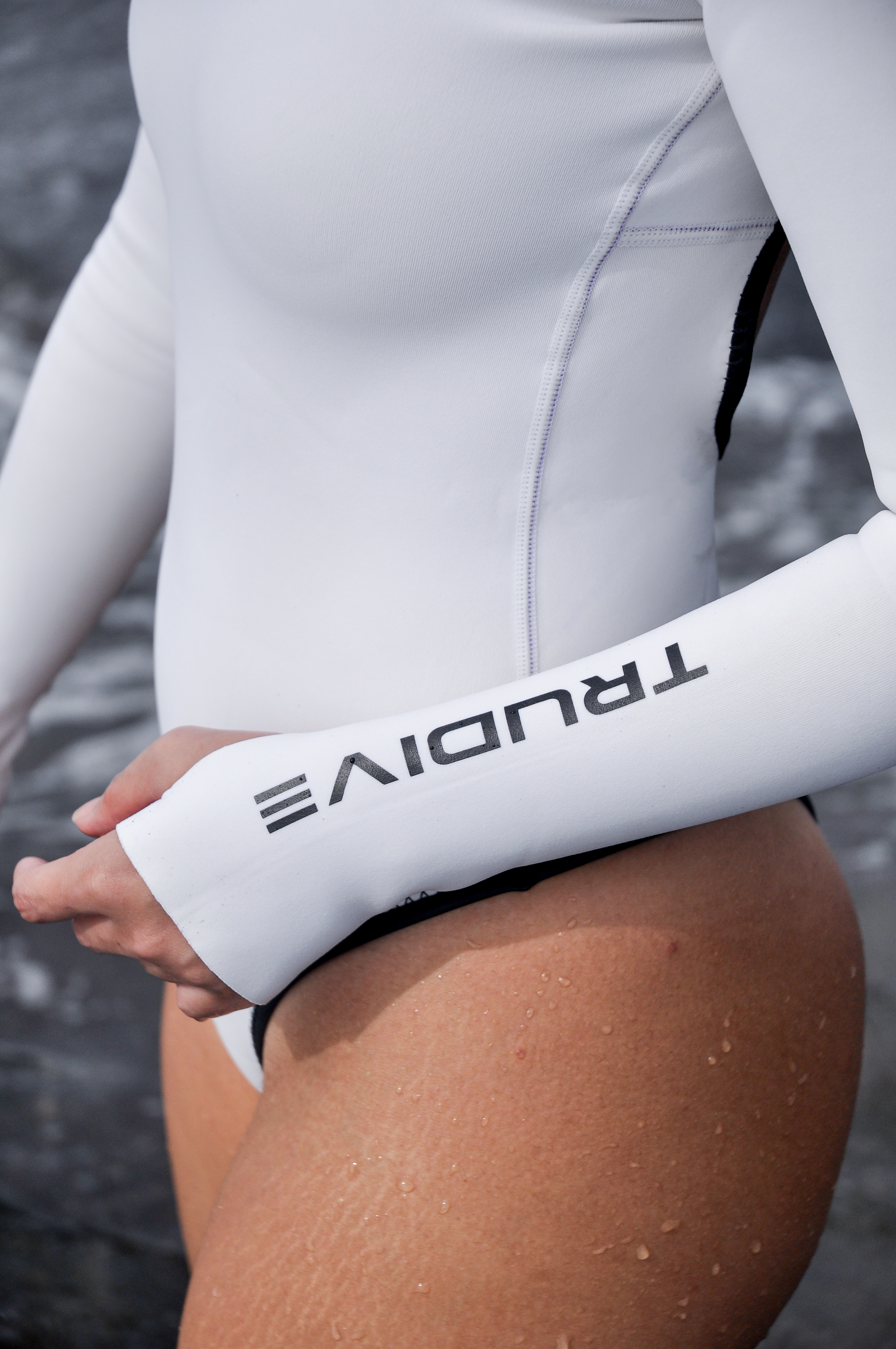
- A high-cut leg frees the hip. The side of the leg sits above the hip bone, so your kick opens up and the suit does not bunch when you sit on a board, kneel in the shallows or climb back onto a boat.
- Nothing to catch or fail. No zip, no velcro, no toggle near a mask strap or a fin buckle. You step in, ease it over the hips and smooth the neoprene into place.
- Drafted as a backless springsuit women can swim in. Because the cut is built as a backless springsuit women pull on in seconds, one suit covers the dive boat, the snorkel and the pool on the same trip.
- Coverage kept where it matters. Chest, ribs and hips stay covered for warmth and for protection from sun, reef and board rash. The back is the only thing given up, and it is the part that restricts movement most.
Premium 2 mm Limestone Neoprene
Limestone neoprene is made with calcium carbonate derived from limestone rather than relying entirely on petroleum-based ingredients, and the sheet that comes out of it is lighter and softer, with a more consistent cell structure than older neoprene blends. In the water it feels supple rather than rubbery, which is why it suits a cut that has to move with the body instead of holding a shape of its own.
At 2 mm, this is a warm-water layer. It takes the edge off a long session, keeps sun and reef off your skin, and adds so little extra thickness that your weighting barely changes when you put it on. It also packs small, which matters if you travel with one bag and a camera.
The limestone sheet is what gives the suit its stretch and its staying power: it recovers after a day in the water, resists the wear salt and sun put on thinner fabrics, and keeps its shape at the hips and shoulders across a season. What 2 mm cannot do is replace a thicker suit in cold water, and the open back gives up a little warmth along the spine — this is a warm-sea and pool suit, not a cold-water one.
360° Stretch and Panel Comfort
- Stretch in every direction. The 360° stretch lining flexes lengthwise and across the width of each panel, so a twist or a deep breath meets give rather than resistance.
- Snug on purpose. Neoprene warms you by holding a thin layer of water against the skin, so the suit should feel firm the first time you pull it on and soften as it warms. A roomy dry fit will flush once you are in the water.
- Stretch where the body bends. Shoulders, ribs and hips carry most of the movement in a stroke, and those are the areas the suit is drafted to follow.
- Less fabric, less drag. A close cut leaves fewer edges to catch water on a turn, a kick or a duck dive.
- Comfort out of the water. Sitting on a boat, walking across hot sand or rinsing gear at the tap, the suit moves with you instead of locking your posture.
- Easy to get out of. The pull-on construction comes off the same way it goes on: peel from the shoulders, roll it down over the hips and step out, no zip to fight with wet hands.
Product Specifications
| Thickness | 2 mm |
| Neoprene | Limestone neoprene |
| Lining | 360° stretch lining |
| Back | Fully open |
| Leg | High cut |
| Closure | Pull-on, no zip |
| Sizes | S, M, L, XL, 2XL, 3XL, plus tall and short fittings |
| Colours | Black, Tiffany Blue, Baby Pink, white with black trim |
| Outer surface | Water-repellent |
| Ideal conditions | Warm water — mild seas, lagoons and pools |
Fabric Performance and Care
Water beads and runs off the outer surface, so you are not streaming water when you climb back on the boat, and the fabric dries quickly enough that a morning dive and an afternoon snorkel can share one suit. The same surface resists what ages neoprene fastest in the tropics: salt crystals left to dry in the seams, strong sun, and constant flexing at the hips and shoulders.
Looking after it takes a few minutes. Rinse in fresh water after every saltwater session — salt left to crystallise in the seams is what stiffens a suit over a season — then hang it inside out in the shade. Direct sun dries neoprene fast and ages it just as fast, and a hot car or a radiator will do the same. Store it rolled or laid flat rather than folded tightly under weights, and keep velcro straps, fin buckles and anything sharp away from the surface. Sunscreen and tanning oil are ideally applied before the suit goes on and rinsed off the neoprene afterwards.
Those small habits pay off: a suit that is rinsed, shaded and stored loosely keeps its stretch and its colour far longer than one left damp in a bag at the back of a van.
Colours and Size Range
- Black — the working colour. It hides sand, sunscreen and the marks of a real dive day, and it pairs with black fins, mask and boots without a second thought.
- Tiffany Blue — the bright option. It reads clearly underwater, shows up in photographs, and makes you easier to spot from the boat.
- Baby Pink — a softer tone that stands out against dark water and dark sand without shouting on land.
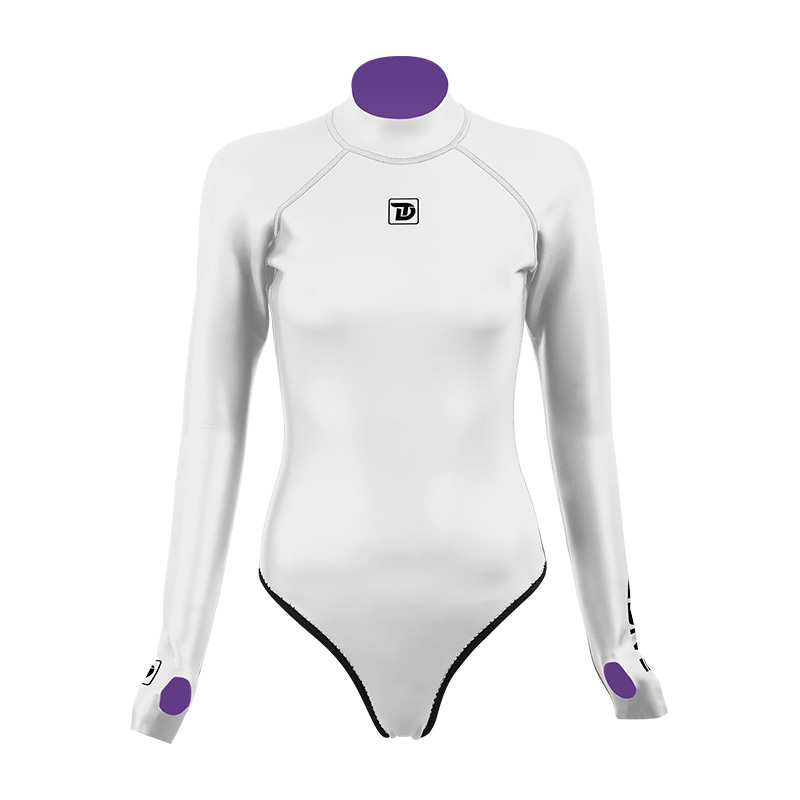
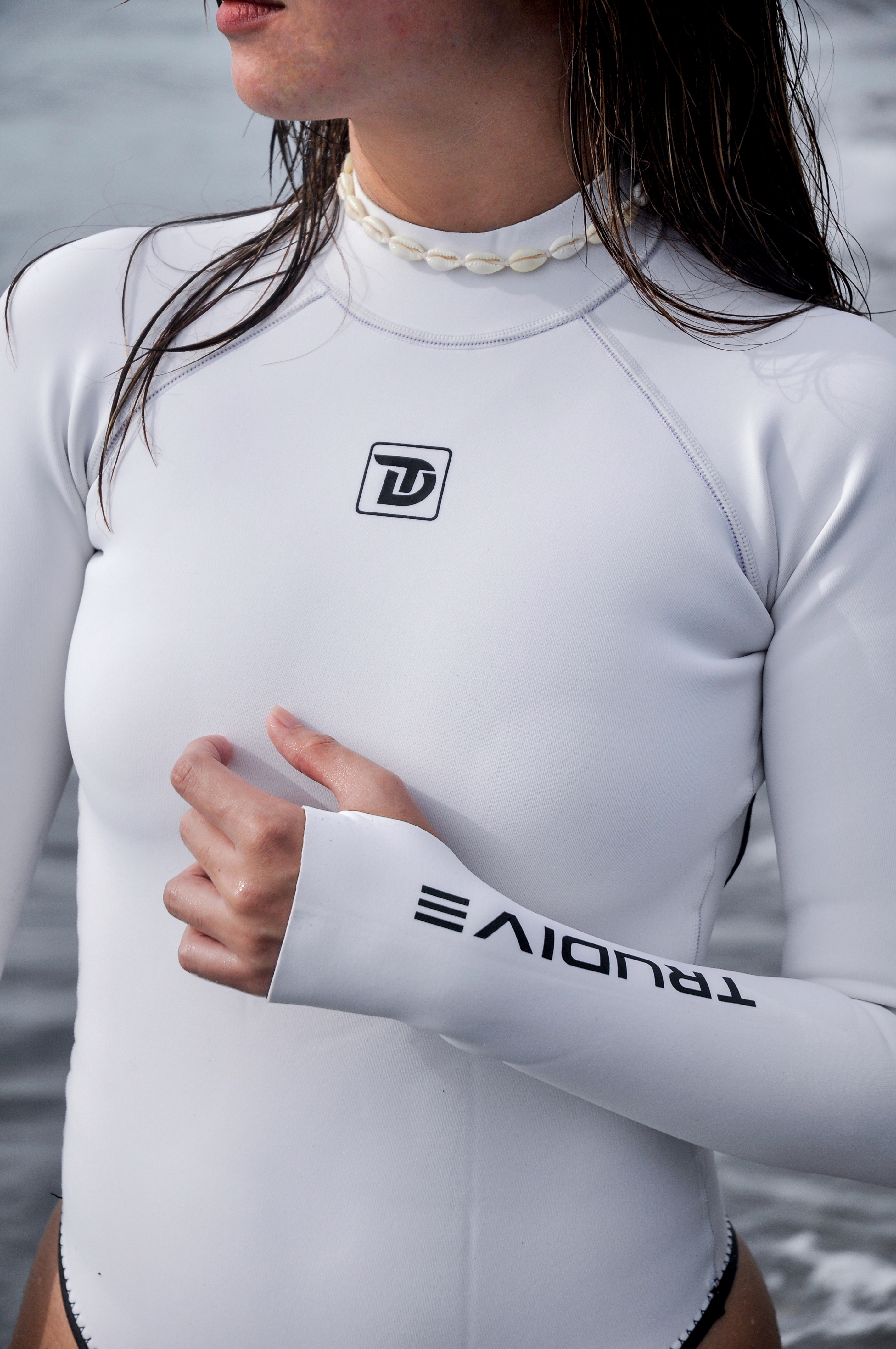
- White with black trim — the graphic one: a white body with black edging and the TRUDIVE logo on the sleeve, the closest this cut gets to a swimwear look on the beach.
- S to 3XL with tall and short options. The size menu carries the standard run plus tall and short variants and extra-tall fittings, so a high cut neoprene swimsuit can be matched to torso and leg length rather than only to dress size.
- All four in one place. Every colourway is listed in our online wetsuit shop, and if you are torn between two, ask us for a daylight photo of the one you are leaning towards.
Choosing Your Size
- Measure your bust, waist and hip with a soft tape, standing relaxed and wearing what you would wear under the suit. Keep the tape level and snug, never pulled tight.
- Match the largest of those three measurements to the size list, then check that size against the height range for standard, tall or short fittings.
- Choose by measurement rather than by the size you buy in street clothes; neoprene sizing runs tighter than swimwear sizing.
- Take the tall or short fitting when your torso or leg length sits outside the standard range, instead of sizing up or down to fix length.
- Expect a firm fit on the first try. A high cut neoprene swimsuit should feel tight when dry and ease once wet; if it feels comfortable and roomy dry, it will flush in the water.
- Check where the high-cut leg sits in a mirror — above the hip bone, level on both sides, with no digging at the front.
- Try it on before your trip, in a bath or a shower, so a fit issue shows up at home rather than on a boat.
Warm-Water Activities
- Reef snorkelling and shallow dives. Two millimetres takes the chill off a long snorkel and keeps your chest and shoulders off the coral without making you bulky in the water.
- Warm-water scuba. Pair it with your usual buoyancy setup — a thin suit adds almost nothing, so your weighting stays where you know it.
- Freediving and spearfishing in mild seas. The open back leaves the diaphragm and shoulders free for a full breath and a smooth duck dive.
- Summer surfing and bodyboarding. The high-cut leg leaves your hips free to pop up, and the neoprene keeps sun and rash off your chest through a long session.
- Pool laps and training. A backless springsuit women can pull on poolside is easier to live with than a full suit — on and off in seconds between sets.
- Warm-water trips. Planning to buy women diving suit gear for a week in the tropics? One 2 mm pull-on cut covers the boat, the reef, the pool and the beach.
Related Styles
If this cut is not quite the one, the rest of the range solves slightly different problems. Siren Front Zip Warmth Bikini/Bodysuit 3 mm is the warmer choice — 3 mm of neoprene with a front zip for spring water and repeat dives, and the one to take if you feel the cold. TRUDIVE Open Back glide skin wetsuit Cut Bikini keeps the open back but changes the outer surface to glide skin, which is smoother and lower friction through the water. TRUDIVE Zipper glide skin spring wetsuit Cut Bikini carries the same 2 mm warm-water brief with a front zip instead of a pull-on, so entry is quicker if you would rather have a closure. For a partner or a dive buddy, Men's Glide Skin Classic Freediving Wetsuit is the men's counterpart in the same glide skin construction.
Ordering and Delivery
- Check your size first. Measure bust, waist and hip, compare the numbers with the size list, and ask us if you land between two sizes or need a tall or short fitting.
- Pick the colourway you will actually wear. Black and Tiffany Blue are the forgiving ones in daily use; white with black trim is the graphic option. Screens vary, so ask for a daylight photo if the exact shade matters.
- Confirm delivery timing for your trip. Dispatch and transit times shift with season and destination, so tell us your travel date and we will confirm what is realistic before you order.
- Payment and checkout. The payment methods available to you are shown at checkout; if you need a different method, ask before placing the order.
- Exchanges and returns. Confirm the current policy for your country and for sale items before ordering — it matters most on a first suit where the fit is still unknown.
- How it arrives. Neoprene ships folded and may hold a soft crease; it settles once the suit is worn and wet, so try it on before you decide anything.
- Placing the order. Orders go through our online wetsuit shop and are confirmed by email; keep that confirmation, because it is what we ask for if you need to follow up.
- Planning a trip? If you are about to buy women diving suit gear for a fixed date, message us with the destination and dates first — sizing and timing are easier to sort before the order than after.
Customer Feedback
The suit holds a 5.0 rating from 5 reviews, and 146 have sold. Buyer photos are the useful part: they show the open back and the high-cut leg in daylight, on different body shapes, rather than under studio light. Read them alongside the measurements in the size list — a photo shows you where the high cut lands, the numbers tell you which size gets you there. If yours has already been in the water, a short review and a photo help the next diver choose.
Layering Under a Full Suit
- A second skin, not a second suit. Pulled on under a thicker wetsuit, this 2 mm open back bikini wetsuit adds warmth across the chest, ribs and core — the areas that chill first on a long day in the water — without adding extra volume into the arms or legs of the suit over it.
- No hardware against your spine. A back zip, its leash and a storm flap all sit exactly where a base layer presses hardest. This cut is a pull-on, so the outer suit's closure goes over smooth neoprene instead of over a second zip.
- The high-cut leg stays out of the way. The hip panel and waistband of an outer suit land right on the hip bone; this high cut neoprene swimsuit finishes above that line, so the two edges do not stack, roll or rub under a weight belt or BCD waistband.
- When layering earns its place. Dawn dives before the sun is on the water, the third or fourth dive of a liveaboard day, a cold thermocline crossing an otherwise mild reef, and shoulder-season trips when the sea sits at the cool end of warm.
- Getting dressed in the right order. Base layer first, smoothed flat at the leg openings and neckline, then step into the outer suit and close it. Run a hand around the neck and hips to check that no edge has doubled over.
- Size the base layer on its own numbers. Choose it by your bust, waist and hip measurements rather than by the size of the suit you wear over it — the two do not need to match. If you fall between sizes, ask us before ordering both.
- Dry it between dives. A damp base layer under a dry outer suit is what makes an afternoon session feel cold. Hang it in the shade after the morning dive and it is ready to go back on.
- Off the boat it still works alone. The same pull-on cut swims laps, walks the beach and snorkels the shallows on its own, so one piece covers the layered dives and the warm afternoon that follows.
- What layering will not do. A 2 mm pull-on under a thicker suit buys comfort in mild water and repeat dives. It does not turn a warm-water cut into a cold-water setup, and it is not a substitute for a properly thick suit in genuinely cold seas.
Advanced Neoprene Material for Enhanced Performance
Crafted with 2 mm limestone neoprene and a 360-degree stretch lining, this wetsuit bikini offers superior flexibility and quick drying, moving with you rather than against you. It suits active water sports enthusiasts who value both style and performance. If you need the exact neoprene thickness or lining specification confirmed for your order, ask us before you buy.
Fast-Drying and Durable Fabric
The high-quality fabric dries quickly and resists wear and tear, even with frequent exposure to saltwater. Its water-repellent surface keeps you comfortable in and out of the water, making it a reliable choice for regular water sports activities. For care and washing guidance suited to the water you swim in, check with us before first use.
About Our Company
TRUDIVE is an independent water-sports brand built around a simple idea: warm-water divewear that feels like you rather than equipment. Our online store opened in 2021, and we have been designing and refining our own wetsuit collections ever since, guided by fit feedback from divers, snorkelers and swimmers. You will also find us on Instagram, Facebook, YouTube, Xiaohongshu and Bilibili, where we share real sessions, styling and sizing tips. Questions about fit, care or an order reach our own team directly, before and after you buy.
FAQ
Q1. Is an open back bikini wetsuit warm enough for diving?
A 2 mm open back bikini wetsuit is a warm-water suit, and that is the honest limit of it. It takes the edge off a long snorkel or a shallow dive in mild seas and keeps sun and reef off your skin, but the open back does give up heat along the spine, and 2 mm will not carry you through a cold thermocline or a long, deep dive. If you feel the cold quickly or dive repeatedly in cooler water, a thicker front-zip style is the better pick.
Q2. How does a backless springsuit feel compared with a full springsuit?
Cooler and freer. Without a back panel or a closure you lose the coverage a full springsuit gives across the spine, and you gain a suit that disappears when you reach, twist or breathe up for a dive. Most people notice it at entry and exit — nothing to close, nothing cold against the back, no reaching behind the shoulders. In exchange, it is not built to hold warmth in cool water; it is a warm-sea and pool piece.
Q3. Will a high cut neoprene swimsuit stay in place in the water?
It will if the size is right. Neoprene holds by tension, so a suit that fits snugly at the hip and shoulder stays where you pulled it, while one that feels roomy when dry will shift and flush once it is wet. Check the side of the leg in a mirror before your first session — it should sit above the hip bone and level on both sides. If it rides up or digs in at the front, try the neighbouring size rather than living with it.
Q4. Can I wear it under a full wetsuit?
Yes. A 2 mm pull-on cut sits flat under a full suit and adds warmth at the chest and core without changing your buoyancy much, which helps on a liveaboard with two or three dives a day. Wear it as the base layer, pull the thicker suit on over the top, and make sure nothing bunches at the high-cut leg before you close up.
Q5. Is this a freediving suit or a swim suit?
Both, within limits. The open back and high-cut leg leave the diaphragm and shoulders free for a full breath and a smooth duck dive, so shallow warm-water freediving and spearfishing work well, and the same cut swims laps without dragging. What it is not is a depth suit: for cold water or long sessions at depth you want more neoprene, so if you are about to buy women diving suit gear for that kind of diving, choose a thicker front-zip style instead.